What Does a Glow Plug Do?
- Written by
- Diesel Glow Plug Editorial Team
- Reviewer
- Diesel Glow Plug Editorial Team
- Review date
- First published
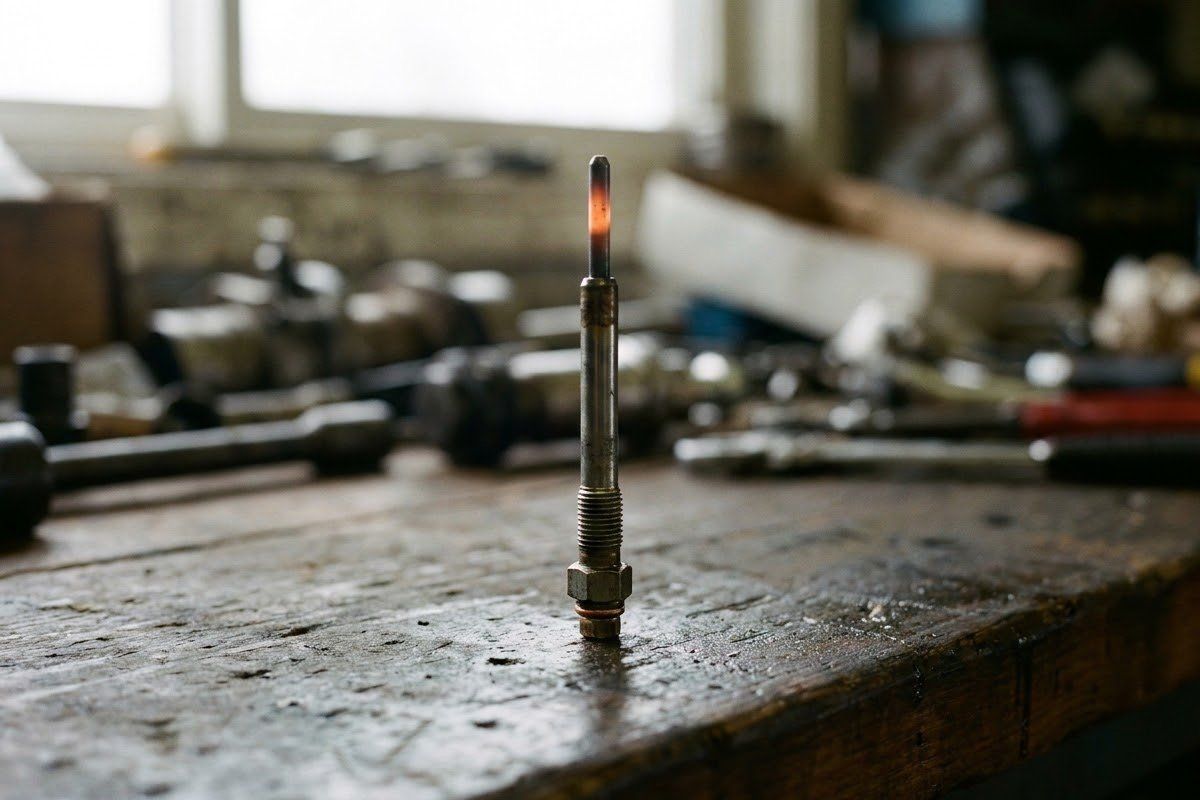
A glow plug pre-heats the combustion chamber of a diesel engine so a cold engine can start. Diesels ignite fuel with the heat of compressed air, and in cold weather compression alone may not get the air hot enough. The glow plug supplies extra heat before and sometimes just after starting. Gasoline engines use spark plugs instead and need no such heater.
This is part of: Diesel Glow Plugs: What They Do, Failure Signs and Replacement
A glow plug pre-heats the combustion chamber of a diesel engine so a cold engine can start. It is one part of the larger glow plug system, and this page explains what it does and when.
Short answer: it pre-heats the chamber for cold starts
A glow plug adds heat to the air in a diesel’s cylinders when the engine is cold. NGK describes it as a kind of immersion heater that pre-heats the combustion chamber air, especially when the weather gets cold. Without that heat, a cold engine may not reach the temperature that lets compressed air ignite the fuel.
Step by step: key on, light, start, afterglow
On a typical system the sequence has four steps, though details differ by vehicle. Ford’s 7.3L Power Stroke supplement shows one version:
- Key on. The control module energizes the glow plugs as soon as the ignition is turned ON and decides how long to keep them on from engine oil temperature and barometric pressure.
- Light on, then off. The WAIT TO START light is lit while glow plug heat is needed. Ford says to wait until it goes off before starting, and that it should always light briefly with a cold engine and the key on. If it does not light, Ford says the system should be checked and repaired promptly to avoid cold-start difficulty.
- Start. Do not crank for more than 30 seconds at a time, per Ford, and wait 30 seconds before trying again.
- Afterglow. Ford says the plugs stay activated for up to two minutes after the engine starts. Bosch calls this post-glow and lists 3 minutes for its Duraterm plugs.
Ford adds that leaving the key ON for more than two minutes without starting can make starting difficult because the plugs stop; turn the key off and back on to reset. Your own manual describes your vehicle’s process.
Why diesels need it and gas engines do not
A diesel relies on compression heat alone to ignite fuel, so in the cold it may need help. Bosch says cold intake air and cold cylinder walls make it hard to reach the starting temperature. A gasoline engine uses a spark plug, so cold air does not stop ignition in the same way. See does a diesel engine have spark plugs and how a diesel engine works.
Cold versus warm engine
A warm engine needs less pre-heat. Ford’s supplement says the required glow time decreases as engine oil temperature and barometric pressure increase. Some designs still run the plugs after starting. NGK says modern plugs may keep glowing after start-up and help with diesel particulate filter regeneration.
If starting becomes difficult or the glow plug light behaves differently, read the glow plug light guide, then test with the safe methods in your manual. No part of this page replaces your owner’s manual or a qualified diesel technician.
Answers to common questions
Do glow plugs run while driving?
Some do, briefly. Bosch describes a post-glow phase in which modern plugs stay active after the engine has started, for efficient, fuel-economical running in stop-and-go traffic; its brochure lists a post-glow time of 3 minutes for its Duraterm plugs. Ford's 7.3L supplement says its plugs stay activated for up to two minutes after the engine starts. Once warm, pre-heat is not needed; your manual explains your vehicle.
What is afterglow?
Afterglow, which Bosch calls post-glow, is the glow plugs continuing to heat for a short time after the engine has started. Bosch says it supports efficient, fuel-economical operation, for example in stop-and-go traffic. NGK adds that some modern plugs keep glowing after start-up and help with diesel particulate filter regeneration. Not all vehicles have it.
Is a glow plug a heater?
Yes. It is an electric heating element in the cylinder head. NGK describes glow plugs as a kind of immersion heater that pre-heats the air in the combustion chamber to help the engine start, especially in cold weather. It heats the chamber rather than the cabin, and it is not a spark source, so it differs from a gasoline engine's spark plug.
Why do gas engines not need glow plugs?
Gasoline engines ignite a fuel and air mix with a spark plug, so they do not depend on compression heat to start combustion. The US Department of Energy says gasoline engines start the explosions with sparks, whereas in diesel engines fuel ignites on its own in compressed air. That is why the heater is a diesel-specific part.
What happens if glow plugs do not work?
A cold diesel may be hard to start, crank for a long time or idle roughly at first. Bosch lists no-start, excessive cranking, rough idle after starting and excess exhaust emissions after starting as signs. Excessive cranking can dilute oil with fuel, so stop and see a qualified technician rather than cranking repeatedly.
Sources
- Bosch Auto Parts (US): Glow Plugs, technical information and FAQboschautoparts.com
- Bosch: Glow plugs Duraterm, Duraterm HighSpeed and DuraSpeed (brochure)boschaftermarket.com
- Ford: 7.3L Power Stroke Diesel Supplement to the Owner Guide (2000)fordservicecontent.com
- US DOE EERE: Just the Basics, Diesel Engine (August 2003)www1.eere.energy.gov
Worth reading next
- Diesel Glow Plugs: What They Do, Failure Signs and Replacement
Diesel glow plugs explained: what a glow plug does, how the wait-to-start sequence works, failure signs, testing and when replacement belongs to a shop.
- 7.3 Powerstroke Glow Plug Relay: Function, Failure Signs, Testing
What the 7.3 Powerstroke glow plug relay does, how its failure can look, and the safe order for checking it before replacing glow plugs or parts.
- 7.3 Powerstroke Glow Plugs: Overview and Replacement Notes
7.3 Powerstroke glow plugs: how Ford describes the system, the wait-to-start light, testing and replacement cautions, and where to confirm fitment.
- Glow Plug Light: What It Means and What to Do When It Flashes
What the diesel glow plug light means, how normal wait-to-start differs from a fault, and what to check or do when it flashes or stays on.
- Glow Plug Replacement Cost: What Drives the Price
What drives glow plug replacement cost: plug count, engine access, seized plugs and labor. Learn how to get a quote, with no price claims here.
- How to Test Glow Plugs: Safe Methods and Readings
How to test glow plugs safely: the safety rules, what a resistance check can tell you, other causes to rule out, and when to hand it to a technician.