Block Heater Cords and Extension Cords: Safe Use
- Written by
- Diesel Glow Plug Editorial Team
- Reviewer
- Diesel Glow Plug Editorial Team
- Review date
- First published
Use the cord and outlet your owner's manual names: the Ram manuals we read call for a grounded, three-wire extension cord, and one specifies a ground-fault interrupter protected outlet. OSHA workplace guidance adds hard-use rated cords with strain relief. Stop using any cord that is frayed, cracked or missing its ground prong.
Warning
Stop and call a professional if: the cord or plug is cracked, frayed, melted or discolored; a ground prong is missing; the outlet is hot, loose or sparks; or a breaker or GFCI trips repeatedly. Unplug first, and ask a qualified electrician or technician. Mains voltage with snow and water around it can cause fire, shock and death. This site sells nothing and gives no installation or wiring instructions.
This is part of: Engine Block Heaters: How They Work and When to Use One
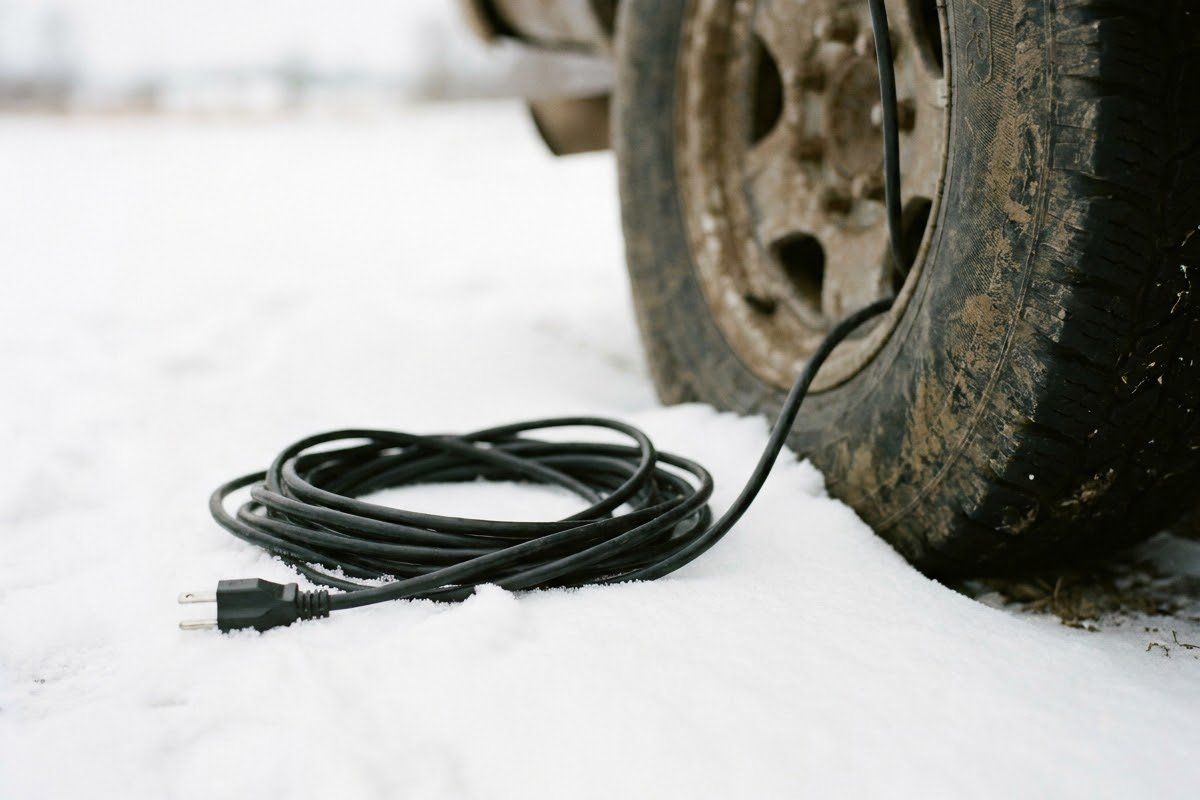
A block heater cord is the mains-voltage lead that connects an engine block heater to an outlet, sometimes through an extension cord. This page is about the cord side of engine block heaters. It is a checklist drawn from two Ram owner’s manuals, OSHA’s construction electrical guidance and a CPSC home wiring guide, not a wiring guide. Your own manual always comes first.
What is the block heater cord and plug?
The cord is the pigtail that connects to the heater and the plug that goes into the outlet. The 2019 Ram 1500 Classic 3.0L diesel supplement notes that the engine block heater cord is a factory-installed option, and the 2019 Ram 2500/3500/4500/5500 diesel supplement says the cord is routed under the hood to the right side. Where yours is and how it connects differs by vehicle, so use your manual to find it. “6.7 Cummins block heater cord” searches lead to the same advice: the part and routing are in the manual for your year.
What do the manuals say about outlets and extension cords?
Both manuals we opened are specific about the type of cord and one about the outlet.
- The 2019 Ram 2500/3500/4500/5500 diesel supplement: connect the cord to a ground-fault interrupter protected 110-115 volt AC outlet and use a grounded, three-wire extension cord.
- The 2019 Ram 1500 Classic 3.0L diesel supplement: a 110-115 volt AC outlet and a grounded, three-wire extension cord.
Neither opened page gives a wire gauge or maximum length. We do not invent one. If you need a gauge or length, ask the heater maker or a qualified electrician.
Extension cord rules from OSHA
OSHA’s construction eTool is workplace guidance, but its rules are a useful floor for any cord left outdoors in winter:
- Use only 3-wire extension cords.
- Use only cords marked with a designation code for hard or extra-hard usage.
- Do not remove ground prongs from cord and plug connected equipment or extension cords.
- Use only cords, connection devices and fittings equipped with strain relief.
OSHA also lists ground-fault circuit interrupters on 120-volt, single-phase, 15 and 20 ampere receptacles as one protection option on construction sites, and says that equipment with frayed cords or missing ground prongs should be removed from service.
Signs to stop using a cord
Stop and unplug if you see:
- cracked, cut or worn insulation, or exposed wire;
- a missing or bent ground prong;
- a loose-fitting plug or outlet;
- any melted, scorched or discolored spot;
- a plug or outlet that is unusually hot.
The CPSC home wiring guide says cords and plugs should never be hot, painful to touch or discolored from heat. We give no temperature figure. Treat a hot cord or plug as a stop signal and ask a qualified electrician. Replace a damaged extension cord with one that matches your manual. A damaged cord on the vehicle itself is a technician job.
Outlets, timers and routine
Plug into a GFCI-protected outlet where your manual says so, keep the plug connection out of standing water and snow, and unplug before you drive away so the cord is not dragged. A timer can help limit run time, but use only one that is rated for the heater’s load and approved by a qualified electrician. For plug-in times, see diesel engine block heaters and how to start a diesel in cold weather.
Answers to common questions
Can I use a regular extension cord?
Only if it meets what your manual requires. The Ram manuals we read call for a grounded, three-wire extension cord, so a two-prong household cord does not qualify. OSHA's construction workplace guidance goes further and says to use only 3-wire cords marked for hard or extra-hard usage, and cords and fittings with strain relief. We cannot give a gauge or length, because neither manual we opened states one.
Why does the cord feel warm?
The U.S. Consumer Product Safety Commission's home wiring guide says cords and plugs may be warm but should never be hot, painful to touch or discolored from heat. It says hot plugs and sockets are caused by deteriorated connections, and that overheating along a whole extension cord is usually caused by overloading. It says to feel cords in use and, if one is hot, disconnect the appliance. None of the sources we opened give a temperature figure, so we give none. Unplug a cord that is hot, smells hot or looks discolored, and have a qualified electrician find the cause.
Should it be GFCI-protected?
The 2019 Ram 2500/3500/4500/5500 diesel supplement says to connect the heater cord to a ground-fault interrupter protected 110-115 volt outlet. OSHA's construction guidance also lists ground-fault circuit interrupters on 120-volt, single-phase 15 and 20 ampere receptacles as one of its protection options for job sites. If your outlet is not protected, a qualified electrician can advise on adding protection.
Can I use the cord if the insulation is cracked?
No. OSHA's electrical guidance lists using cords with worn insulation or exposed wires as misuse and says equipment with frayed cords or missing ground prongs should be removed from service. A cracked block heater cord or extension cord should be replaced with a part that matches your manual, and a damaged cord on the vehicle itself is a job for a qualified technician.
Can I cut off the third prong to fit an outlet?
No. OSHA says not to remove ground prongs from cord and plug connected equipment or extension cords, and both Ram manuals call for a grounded cord. If your outlet has only two slots, do not defeat the ground. Ask a qualified electrician to install a properly grounded outlet instead.
Sources
Worth reading next
- How to Start a Diesel in Cold Weather
Start a diesel in the cold the way the manual says: wait-to-start lamp, cranking limits, battery, block heater, fuel, and why starting fluid is a no.
- Engine Block Heaters: How They Work and When to Use One
What an engine block heater is, how it warms coolant for easier cold starts, and how to check your manual for when to plug in and which cord to use.
- Diesel Engine Block Heater: Trucks, Tractors and Generators
How a block heater helps a diesel truck, tractor or generator start in the cold, what two Ram manuals say about plug-in time, and why your manual rules.
- Diesel Fuel Gelling: Temperatures, Signs and Basics
What diesel fuel gelling is, how cloud point and pour point differ, why no single temperature applies, and what makers and DOE sources say on winter fuel.