Diesel Engine Oil: Viscosity, Specs and How to Choose
- Written by
- Diesel Glow Plug Editorial Team
- Reviewer
- Diesel Glow Plug Editorial Team
- Review date
- First published
Choose diesel engine oil by what your owner's manual specifies: the viscosity grade and the API service category. API's diesel categories start with C, and CK-4 is one of API's current diesel categories, while FA-4 is a narrower category for certain XW-30 oils that API says is not backward compatible with CK-4. Follow the manual's change interval.
Safety first
Hot oil and a hot engine can burn you. Let the engine cool, use jack stands on level ground (never a jack alone) for any work under the vehicle, and dispose of used oil as your local rules require. See a qualified technician for oil pressure warnings, leaks or anything that needs fuel lines opened.
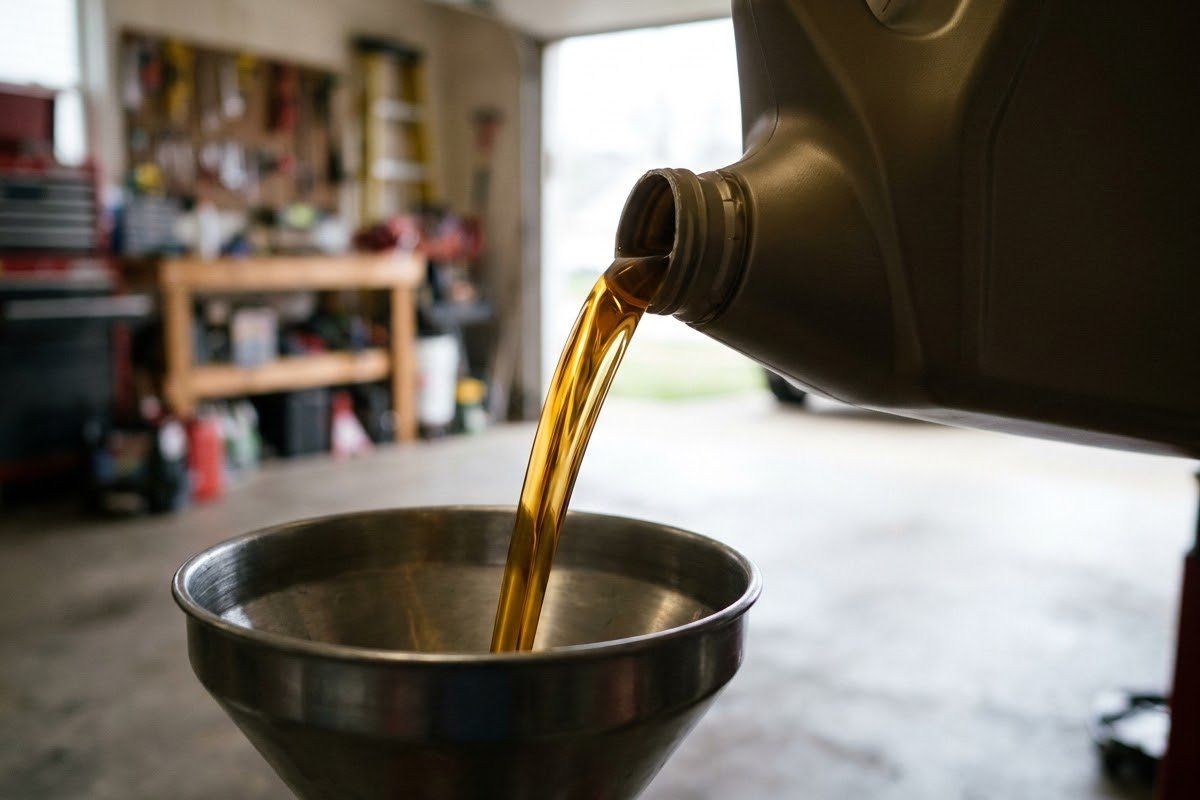
Diesel engine oil is chosen by two things your manual states: the viscosity grade and the service category. On the category side, API lists its diesel categories with a C prefix, and CK-4 is one of the current ones. We name no brands and rank no products. Your owner’s manual wins over anything here, and the neighboring guides cover the specifics: 15W-40 diesel oil, heavy duty diesel oil and car oil in a diesel engine.
What makes diesel oil different?
It carries a different category mark. API’s gasoline categories use an S prefix (such as SP) and its diesel categories use a C prefix (CK-4, CJ-4, CI-4, CH-4). The sources we opened do not describe the additive chemistry or soot handling, so we do not either. The practical rule is to buy oil that carries the category your manual calls for.
How do you read the viscosity grade?
The grade is the number pair on the label, and your manual lists the one for your engine and climate. We do not explain the SAE J300 grading scale because we could not open that standard’s text. Use the manual’s grade and do not pick a different one on the advice of a store display.
Service categories: API CK-4, FA-4 and maker approvals
| Category | What API says | Check |
|---|---|---|
| CK-4 | For high-speed four-stroke diesel engines designed to meet 2017 model year on-highway and Tier 4 non-road standards, and previous model year engines; exceeds CJ-4, CI-4 PLUS, CI-4, CH-4 | If using fuel above 15 ppm sulfur, consult the engine maker on service intervals |
| FA-4 | Certain XW-30 oils for select engines; not interchangeable or backward compatible with CK-4 and older categories | Not recommended with fuel above 15 ppm sulfur; refer to the engine maker |
Some engine makers also list their own approvals. If your manual names one, the oil needs to meet it.
Choosing for climate and duty
Climate and duty change the grade your manual lists, and some manuals give a table by temperature. Follow it. Cold-weather start-up has its own page: how to start a diesel in cold weather.
Change intervals
Use the interval in your manual. The diesel engine maintenance checklist puts oil in context with the rest of the service schedule, and glow plugs are another item that matters in the cold. Wrong-fuel mistakes are separate events: see gas in a diesel engine and diesel in a gas engine.
All Oil Fuel guides
- 15W-40 Diesel Oil: What the Numbers Mean and When to Use It
15W-40 diesel oil explained: what the SAE grade does and does not tell you, how API CK-4 and FA-4 fit in, and why your manual decides.
- Can You Use Regular Car Oil in a Diesel Engine?
Whether gasoline-engine oil suits a diesel depends on its API category. Learn what the S and C labels mean and what your manual requires.
- Diesel in a Gas Engine: What Happens and What to Do
Filled a gasoline car with diesel? Do not start it. What to do first, who to call, and how to avoid grabbing the wrong nozzle again.
- Gas in a Diesel Engine: What Happens and What to Do
Put gasoline in a diesel tank? Do not start the engine. What a manufacturer manual says, why it matters, and who to call.
- Heavy-Duty Diesel Engine Oil: CK-4, FA-4 and Approvals
What API CK-4 and FA-4 heavy-duty diesel oil categories mean, which are backward compatible, and why your engine maker's approval decides.
Answers to common questions
Can I use gas engine oil in a diesel?
Check your manual first. API puts gasoline oils in S categories (such as SP) and diesel oils in C categories (such as CK-4), and tells diesel owners to follow their vehicle manufacturer's recommendations on oil performance levels. Our car oil in a diesel guide covers the compatibility question.
How often should I change diesel engine oil?
Use the interval in your owner's manual, which depends on the engine, the duty and the fuel. API notes that if you use CK-4 oil with fuel above 15 ppm sulfur, you should consult the engine manufacturer for service interval recommendations. We give no mileage or hour figure because the sources we opened do not set a universal one.
Does synthetic oil matter?
The sources we opened do not compare synthetic and conventional oil, so we make no claim. API categories describe performance, and your manual says which categories and viscosity grades your engine accepts. Choose an oil that carries the category your manual requires, and do not choose on the claim in an advertisement.
What is the difference between CK-4 and FA-4?
API says CK-4 describes oils for high-speed four-stroke diesel engines designed to meet 2017 model year on-highway and Tier 4 non-road emission standards, as well as previous model year engines. FA-4 describes certain XW-30 oils for select engines and is not interchangeable or backward compatible with CK-4. API says to refer to the engine manufacturer to determine if FA-4 oils are suitable.
Where do I find the oil spec for my engine?
Your owner's manual lists the viscosity grade and the service category or maker approval. Many oil containers print the API category on the label. Match the two. If the manual is missing, the engine maker or a qualified technician can tell you; do not guess from another vehicle.
Sources
Worth reading next
- 15W-40 Diesel Oil: What the Numbers Mean and When to Use It
15W-40 diesel oil explained: what the SAE grade does and does not tell you, how API CK-4 and FA-4 fit in, and why your manual decides.
- Can You Use Regular Car Oil in a Diesel Engine?
Whether gasoline-engine oil suits a diesel depends on its API category. Learn what the S and C labels mean and what your manual requires.
- Diesel in a Gas Engine: What Happens and What to Do
Filled a gasoline car with diesel? Do not start it. What to do first, who to call, and how to avoid grabbing the wrong nozzle again.
- Gas in a Diesel Engine: What Happens and What to Do
Put gasoline in a diesel tank? Do not start the engine. What a manufacturer manual says, why it matters, and who to call.
- Heavy-Duty Diesel Engine Oil: CK-4, FA-4 and Approvals
What API CK-4 and FA-4 heavy-duty diesel oil categories mean, which are backward compatible, and why your engine maker's approval decides.