Diesel Engines Explained for Owners
- Written by
- Diesel Glow Plug Editorial Team
- Reviewer
- Diesel Glow Plug Editorial Team
- Review date
- First published
A diesel engine is an internal combustion engine that ignites fuel with the heat of compressed air instead of a spark. It draws in air only, compresses it until it is very hot, then injects fuel, which ignites on its own. That design explains the parts owners deal with: injectors, glow plugs, emissions equipment and a fuel system that must stay clean.
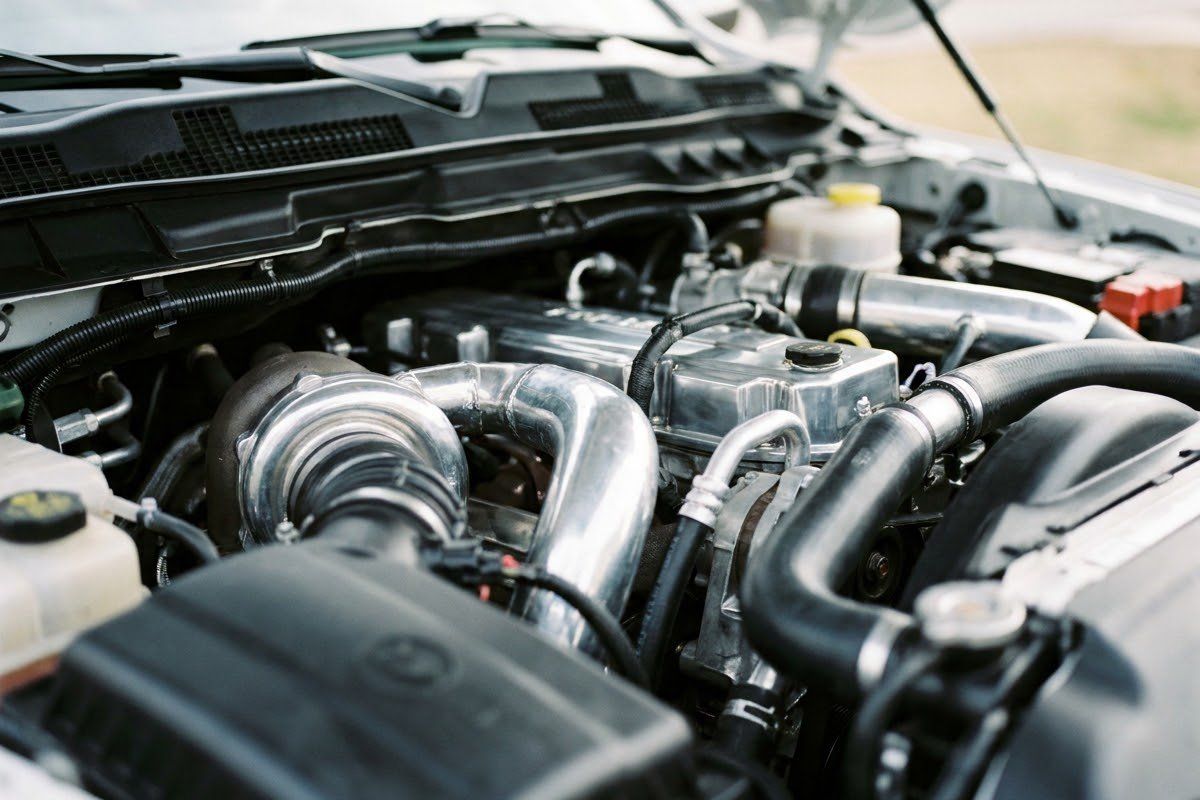
A diesel engine is an internal combustion engine that burns fuel without a spark plug. Diesel Glow Plug is an owner’s guide, not a shop: it sells no parts and offers no repair service, and it points you to your owner’s manual and a qualified diesel technician for anything beyond general information. This page is the hub for the rest of the engine guides on the site.
What is a diesel engine?
A diesel engine is a compression-ignition engine: it draws in air only, compresses it, and then injects fuel into the hot air so the fuel ignites on its own. The US Department of Energy describes the two kinds of internal combustion engine in production as the spark-ignition gasoline engine and the compression-ignition diesel engine.
Like a gasoline engine, a diesel converts the chemical energy in fuel to mechanical energy that moves pistons up and down inside cylinders. A DOE booklet notes that diesels differ from gasoline engines primarily in the way the small explosions occur: gasoline engines start them with a spark, while in a diesel the fuel ignites by itself in air that compression has heated.
Diesels power heavy-duty trucks, buses, tractors, trains and large ships, according to the same booklet. The cycle of intake, compression, power and exhaust strokes is covered step by step in how a diesel engine works.
Why a diesel has no spark plugs
A diesel has no spark plugs because compressing air heats it enough to ignite injected fuel. The DOE booklet explains that air heats up when it is compressed, and that diesel engines compress air far more than gasoline engines do, which is what makes spontaneous ignition possible.
The part people confuse with a spark plug is the glow plug. A glow plug is an electric heater, not a spark source. Bosch explains that in low temperatures, cold intake air and cold cylinder walls make it hard to reach the temperature needed to start the combustion cycle, so glow plugs act as an additional heat source. The full comparison lives in does a diesel engine have spark plugs.
Main parts owners should know
Most owner-facing diesel parts fall into four groups: the fuel injection system, the cold-start heaters, the air system and the emissions equipment.
- Fuel injection. Modern diesels inject fuel directly into the cylinders, and the DOE booklet says an electronic control module working with sensors throughout the engine controls this precisely. On Ford’s 7.3L Power Stroke, the owner supplement lists a frame-mounted electric fuel pump, an engine-mounted fuel filter and water separator, a fuel restriction sensor and a unit injector for each cylinder.
- Glow plugs. Pre-heaters for cold starts, covered in the glow plug guide.
- Air system. The 7.3L supplement describes an air filter restriction gauge that shows when the filter is clogged, and a turbocharger. Not every diesel uses the same air hardware, so your manual governs.
- Aftertreatment. The Alternative Fuels Data Center says diesel vehicles often carry a diesel particulate filter and diesel oxidation catalyst for particulate matter, plus a selective catalytic reduction (SCR) system in which diesel exhaust fluid is sprayed into the exhaust to turn nitrogen oxides into nitrogen and water. EPA says SCR systems using DEF are on nearly all on-road diesel trucks since 2010. Details are in the DEF guide.
Where diesel owners spend their attention
Owners of diesels usually spend attention on four things: cold starts, emissions fluid, oil and fuel.
Cold starts. The cold-start system runs from glow plugs to block heaters. Ford’s 7.3L supplement tells owners to wait for the WAIT TO START light to go out before cranking and not to crank for more than 30 seconds at a time. Never spray starting fluid such as ether into the intake: the same supplement warns it can cause immediate explosive damage to the engine and possible personal injury. See cold-weather diesel starting and the engine block heater guide.
Emissions fluid. If your vehicle uses DEF, it must be topped up. EPA warns that DEF-related derates can limit a vehicle’s performance to nearly inoperable levels, as low as five miles per hour. EPA also notes that the system must be designed to prevent tampering with or bypassing DEF use.
Oil. Diesels need oil that meets the maker’s specification. Ford’s 7.3L supplement says diesel engines require specially formulated oil to resist contamination and that oil viscosity matters to the oil pressure that actuates the fuel injectors on that engine. Read the diesel engine oil guide and check your own manual for the grade and category.
Fuel. EPA states that all highway diesel vehicles must use ultra-low sulfur diesel. The Department of Energy says many diesels can run biodiesel blends such as B20 without modification, that all original equipment manufacturers approve B5, and that you should check engine warranty terms before using higher blends. Ford’s supplement also warns against adding gasoline, gasohol or alcohol to diesel fuel, calling it a serious fire hazard.
Diesel versus gas at a glance
The short version: ignition is the main mechanical difference, and the rest follows from it. A diesel compresses air and injects fuel, while a gasoline engine mixes fuel and air before compression and uses a spark. The comparison table, emissions-system differences and cold-weather notes are in diesel versus gas engines.
Maintenance basics
Diesel maintenance centers on oil and filters, the fuel filter and water separator, the air filter, the cooling system and, where fitted, DEF and the emissions system. Intervals vary by engine and by how the vehicle is used, so the schedule in your own manual comes first. Our diesel engine maintenance checklist lists what to look at and what to leave to a technician.
Warning
Stop and see a qualified technician if you smell raw fuel, see a fuel leak, see a flashing glow plug or engine warning light together with warning messages, see a DEF or derate warning, or if you suspect water or the wrong fuel has been put in the tank.
Free tools
The site offers three small tools: a glow plug resistance check helper, a DEF consumption estimator and a cold-weather guide. Find them on the free diesel tools page.
Related guides
All Engine Basics guides
- Diesel Engine Maintenance Checklist for Owners
A diesel engine maintenance checklist covering oil, fuel filter and water, air filter, DEF, glow plugs and cooling, with safety rules and shop triggers.
- Diesel vs Gas Engines: Differences That Matter to Owners
Diesel vs gas engine compared for owners: ignition, fuel, emissions equipment, cold starts and upkeep, with sources and no price claims.
- Does a Diesel Engine Have Spark Plugs? (No, Here Is Why)
Diesel engines have no spark plugs because compression ignites the fuel. See what glow plugs do instead and how glow plugs differ from spark plugs.
- How a Diesel Engine Works: The Four-Stroke Cycle
How does a diesel engine work? Follow the four strokes of intake, compression, power and exhaust, and see where injection, glow plugs and turbo fit.
Answers to common questions
Is a diesel engine better than a gas engine?
Neither is better for every owner. A 2003 US Department of Energy booklet reports diesels converting fuel to work more efficiently, but the right choice depends on towing, mileage, climate and the care each system needs. Diesels add glow plugs, a particulate filter and DEF, while gasoline engines use spark plugs. Our diesel versus gas comparison sets the differences side by side.
Do diesel engines need spark plugs?
No. A diesel ignites fuel by compression: air is squeezed until it is hot enough that injected fuel ignites by itself, so there is no spark plug. Many diesels do have glow plugs, which are electric heaters that warm the combustion chamber to help cold starts. They are not spark plugs and they do not ignite the fuel the way a spark does.
What fuel does a diesel use?
Diesel fuel, not gasoline. EPA states that all highway diesel vehicles must use ultra-low sulfur diesel (ULSD). Many diesels can also run biodiesel blends, but the US Department of Energy advises checking the engine maker's approval and warranty terms first. Ford's 7.3L supplement warns that adding gasoline, gasohol or alcohol to diesel fuel is a serious fire hazard. If the wrong fuel goes in, do not start or run the engine; call a technician or a tow.
Why do some diesels have a glow plug light?
The light tells you the engine's control system is pre-heating the combustion chamber and when it is ready to start. On Ford's 7.3L Power Stroke, for example, the WAIT TO START light stays on while glow plug heat is needed and the owner guide says to wait until it goes out. Your manual explains your own vehicle's light.
Do all modern diesels need DEF?
No. DEF is used by vehicles with selective catalytic reduction (SCR) systems. EPA notes SCR with DEF is on nearly all on-road diesel trucks built since 2010. Check your manual or the label near the fuel filler to see whether your vehicle takes DEF.
Sources
- US DOE EERE: Just the Basics, Diesel Engine (August 2003)www1.eere.energy.gov
- US EPA: Diesel Exhaust Fluidepa.gov
- Ford: 7.3L Power Stroke Diesel Supplement to the Owner Guide (2000)fordservicecontent.com
- US DOE AFDC: Biodiesel in Diesel Vehiclesafdc.energy.gov
Worth reading next
- Diesel Engine Maintenance Checklist for Owners
A diesel engine maintenance checklist covering oil, fuel filter and water, air filter, DEF, glow plugs and cooling, with safety rules and shop triggers.
- Diesel vs Gas Engines: Differences That Matter to Owners
Diesel vs gas engine compared for owners: ignition, fuel, emissions equipment, cold starts and upkeep, with sources and no price claims.
- Does a Diesel Engine Have Spark Plugs? (No, Here Is Why)
Diesel engines have no spark plugs because compression ignites the fuel. See what glow plugs do instead and how glow plugs differ from spark plugs.
- How a Diesel Engine Works: The Four-Stroke Cycle
How does a diesel engine work? Follow the four strokes of intake, compression, power and exhaust, and see where injection, glow plugs and turbo fit.