Engine Block Heaters: How They Work and When to Use One
- Written by
- Diesel Glow Plug Editorial Team
- Reviewer
- Diesel Glow Plug Editorial Team
- Review date
- First published
An engine block heater is an electric heating element that warms an engine's coolant while the vehicle is parked, so the engine turns over and starts more easily in cold weather. How long to plug it in, and at what temperature, differs by maker, so follow your owner's manual. Use the cord and outlet the manual specifies.
Safety first
A block heater is a mains-voltage electrical device connected to a vehicle that sits outdoors in snow and ice. Stop and ask a qualified technician before any wiring, installation or repair, and unplug the heater and call one if you see a damaged cord, a cracked plug, a hot plug or a coolant leak. This site sells nothing and does not install or repair heaters.
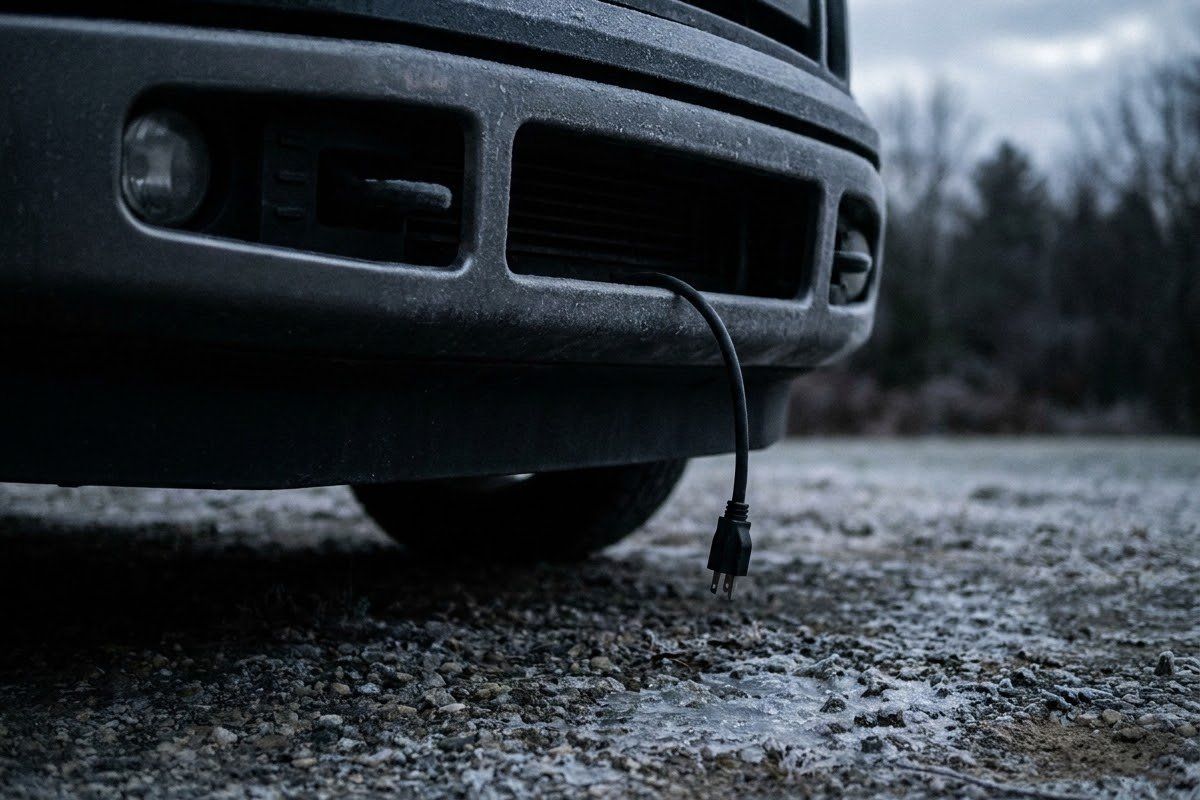
An engine block heater is an electric heating element that keeps engine coolant warm while the vehicle is parked. Warmer coolant means a warmer engine, and a warmer engine starts more easily. This guide covers what the heater does, the common types, when your manual says to use it and how to use the cord. Diesel owners can continue to diesel engine block heaters; the cord rules have their own page at block heater cord safety. Always consult your owner’s manual first.
What is an engine block heater?
An engine block heater warms engine coolant so the engine starts more easily in the cold. A 2019 Ram 2500/3500/4500/5500 diesel supplement puts it as warming “engine coolant” and permitting “quicker starts in cold weather”. The 2019 Ram 1500 Classic 3.0L diesel supplement describes the same part as “a resistance heater installed in the water jacket of the engine”.
You may also see it called a motor block heater, a coolant heater or a freeze plug heater. Searches for “block heater for car” are common, but the same idea applies to gasoline and diesel engines. This site covers it from the diesel owner’s side.
How does a block heater warm the engine?
Electric current passes through a resistance element that sits in contact with the coolant, and the heat spreads through the coolant jacket into the block. The Ram diesel supplement says the heater must be plugged in at least one hour “to have an adequate warming effect on the coolant”, so a few minutes is not what it describes. The numbers differ by manual: at least one hour in the 2019 Ram 2500/3500/4500/5500 diesel supplement, two hours before starting in the 2019 Ram 1500 Classic 3.0L diesel supplement.
What types of block heater are there?
The common designs differ mainly in where the heat is applied (this table is a general description, not maker data). Which type fits your engine is a question for the maker’s parts documentation and a qualified technician, not something to guess.
| Type | Where it sits | Notes |
|---|---|---|
| Freeze plug (core plug) heater | In an engine block opening, in the coolant | Common general design; the Ram manuals describe a resistance heater in the water jacket without naming the type |
| Inline or hose heater | Spliced into a coolant hose | Heats coolant as it passes; involves opening the cooling system |
| Magnetic or pad heater | Stuck to the oil pan or similar | Warms oil or metal from outside; heat transfer varies |
| Tank or circulating heater | Fed from the vehicle’s coolant circuit | General description only; ask the maker for details |
We do not give installation steps. Parts and fit change by engine, and all of them involve a mains-voltage connection.
When should you plug in a block heater?
Plug in when your owner’s manual says to, and not on a number from another vehicle. The two manuals we opened give different guidance:
- The 2019 Ram 1500 Classic 3.0L diesel supplement recommends use in environments that routinely fall below -10 F, says to plug in two hours before the start, and says use is required for cold starts under -20 F.
- The 2019 Ram 2500/3500/4500/5500 diesel supplement gives a minimum of one hour, recommends use below 0 F (-18 C) and says use is required below -20 F (-29 C).
If your manual gives no figure, ask the maker or a qualified technician. For fuel-side cold-weather issues see how cold turns diesel fuel waxy, and for the whole start-up routine see how to start a diesel in cold weather.
How do you use the cord safely?
Use the cord and outlet the manual describes. The 2019 Ram 2500/3500/4500/5500 diesel supplement says to connect the heater cord to a ground-fault interrupter protected 110-115 volt AC outlet and use a grounded, three-wire extension cord. The 2019 Ram 1500 Classic 3.0L diesel supplement also names a grounded, three-wire extension cord. OSHA’s construction guidance adds: do not remove ground prongs from cord-connected equipment or extension cords. Do not use a damaged cord. The block heater cord safety guide goes through cords, outlets and damage signs.
Does a block heater help diesel engines specifically?
A block heater does the same job on a diesel as on any engine, and diesel owners often rely on it alongside glow plugs. The diesel-specific details, including thresholds and factory versus aftermarket parts, are on diesel engine block heater: trucks, tractors and generators. For how glow plugs fit in, see diesel glow plugs.
How much does a block heater cost to run?
Running cost is a simple formula, and we state no prices because none come from a dated primary source. Multiply the heater’s wattage (printed on the heater or in the manual) by the hours plugged in, divide by 1,000 to get kilowatt-hours, then multiply by your local electricity rate from your utility bill. Plugging in only as long as the manual calls for keeps the figure down. The DOE’s idle-reduction page notes that a cab or bunk heater for heavy-duty trucks can include an engine block heater to eliminate “warm up” idling.
For a quick walkthrough of fuel and start-up choices by temperature, use the cold-weather diesel guide.
All Cold Weather guides
- Block Heater Cords and Extension Cords: Safe Use
Block heater cord and extension cord checklist from owner's manuals and OSHA: grounded three-wire cords, GFCI outlets, damage signs, and when to stop.
- Diesel Engine Block Heater: Trucks, Tractors and Generators
How a block heater helps a diesel truck, tractor or generator start in the cold, what two Ram manuals say about plug-in time, and why your manual rules.
- Diesel Fuel Gelling: Temperatures, Signs and Basics
What diesel fuel gelling is, how cloud point and pour point differ, why no single temperature applies, and what makers and DOE sources say on winter fuel.
- How to Start a Diesel in Cold Weather
Start a diesel in the cold the way the manual says: wait-to-start lamp, cranking limits, battery, block heater, fuel, and why starting fluid is a no.
Answers to common questions
Do I need a block heater?
It depends on your engine and your climate, and your owner's manual is the authority. The 2019 Ram 1500 Classic 3.0L diesel supplement recommends a block heater where temperatures routinely fall below -10 F and requires one for cold starts under -20 F. Another maker's manual may say something different, or give no threshold at all. Check the manual for your exact engine and year before you decide.
How long should I plug it in?
Follow your manual. A 2019 Ram 2500/3500/4500/5500 diesel supplement says at least one hour, while a 2019 Ram 1500 Classic 3.0L diesel supplement says to plug in two hours before starting. Those two figures differ because the engines and heaters differ, so do not borrow a number from another vehicle. A timer, if your setup allows one, avoids running the heater all night.
Is it safe to use an extension cord?
Only if the cord is the type your manual allows. The two Ram manuals we read call for a grounded, three-wire extension cord, and the 2019 Ram 2500/3500/4500/5500 diesel supplement also calls for a ground-fault interrupter protected outlet. Cord damage, a loose plug or anything unusually warm is a reason to unplug and have it checked. See the cord safety guide for the full checklist.
Does a block heater replace glow plugs?
No. A block heater warms the coolant before you start, while glow plugs (or an intake heater) heat the combustion air or chamber during the start. A diesel can have both. Your manual's wait-to-start light and starting procedure still apply even when the block heater has been used.
Can I install a block heater myself?
That is a job for your manual and a qualified technician. The Ram manuals describe the heater as sitting in the engine's water jacket, so fitting one involves the cooling system, and the heater is wired to a mains-voltage cord. A factory-installed cord is listed as an option in the Ram 1500 Classic diesel supplement, which shows installation details vary by vehicle. We do not give installation steps.
Sources
Worth reading next
- How to Start a Diesel in Cold Weather
Start a diesel in the cold the way the manual says: wait-to-start lamp, cranking limits, battery, block heater, fuel, and why starting fluid is a no.
- Block Heater Cords and Extension Cords: Safe Use
Block heater cord and extension cord checklist from owner's manuals and OSHA: grounded three-wire cords, GFCI outlets, damage signs, and when to stop.
- Diesel Engine Block Heater: Trucks, Tractors and Generators
How a block heater helps a diesel truck, tractor or generator start in the cold, what two Ram manuals say about plug-in time, and why your manual rules.
- Diesel Fuel Gelling: Temperatures, Signs and Basics
What diesel fuel gelling is, how cloud point and pour point differ, why no single temperature applies, and what makers and DOE sources say on winter fuel.